

AI Presentation Tools: What Actually Works (And What Doesn't)
👋 Hi, I'm Libby. I help rising leaders and executives communicate with clarity and confidence. Each month I share frameworks and real talk on presentation skills, storytelling, and executive presence. For more: The Slide Master | The Presentation Lab | LinkedIn.
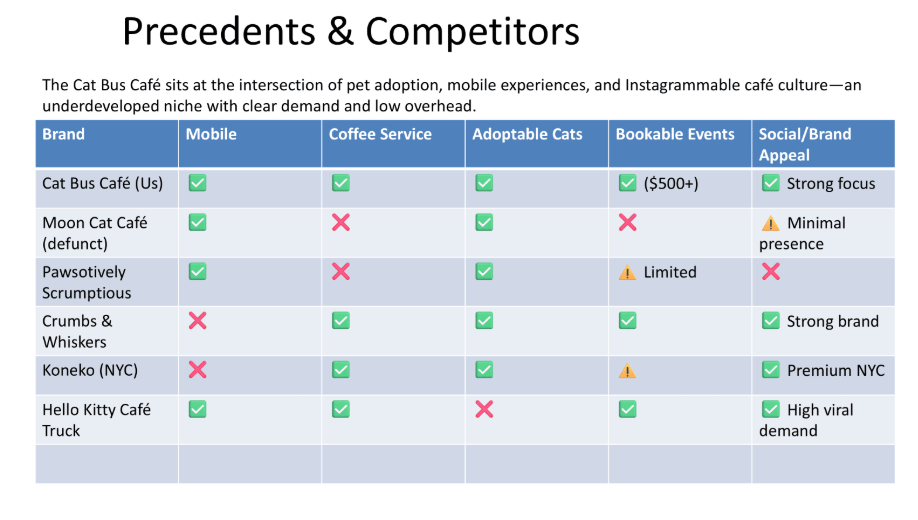
I set out to build a complete pitch deck in 60 minutes using only AI tools. The challenge: create an investor-ready deck for a mobile cat cafe (because why not) using ChatGPT, Gamma, Midjourney, and PowerPoint. The result? Humbling. But also revealing about what AI presentation tools can and can't actually do.Your first section heading
Write the body of this section here. Aim for short paragraphs of two to four sentences with plenty of white space, the way long-form posts read. Use bold for key phrases and add links where they help.
What AI Does Really Well
ChatGPT excelled at foundation work. It created a solid business outline following the Sequoia Capital pitch deck framework. It generated compelling slide titles and subtitles using the pyramid principle, leading with the answer. It gave me something to react to and edit instead of staring at a blank page. That's valuable.
Midjourney produced genuinely cute cat cafe imagery and even videos for the deck cover. Gamma provided decent starting layouts and automatically organized content into slides. The tools saved serious time on tedious tasks: no blank page syndrome, automatic formatting, research assistance. These are real wins.
Here's the thing: AI is like an eager intern. Fantastic at research, first drafts, and handling tedious work. You just can't expect it to do your strategic thinking.

Where Everything Fell Apart
I got too ambitious with scope. I created an outline with 10-15 slides when I should have focused on 4-5 key messages. I was overly optimistic about what Gamma could do and spent too long playing with Midjourney instead of actually building slides.
The limitations became obvious fast. Gamma's data visualizations exported as static images, not editable charts. The AI-generated content was generic, not customized to this specific story. Switching between multiple tools meant constant formatting inconsistencies. Beautiful layouts in Gamma looked terrible when exported to PowerPoint. I had to rebuild half the deck manually.
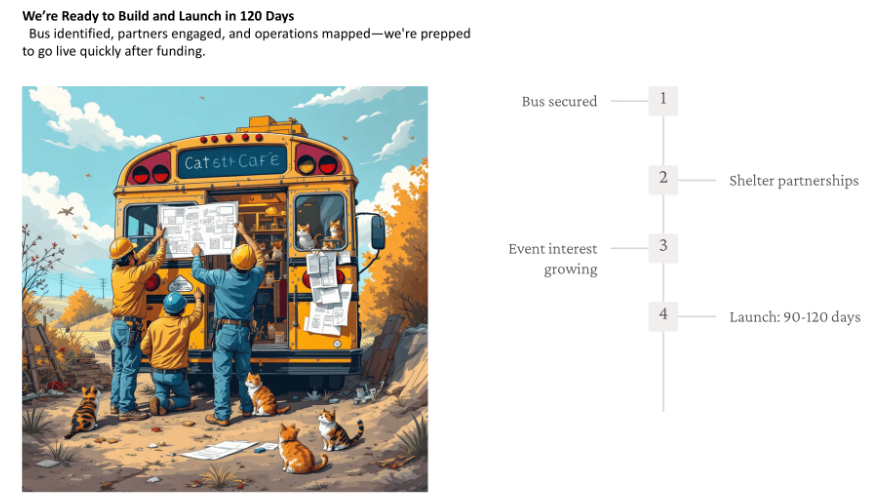
By minute 45, the vibe shifted from calm to tense. I realized I'd underestimated how much editing and strategy work still had to happen after the AI did its part.
The Principles Still Matter
Even with all this AI assistance, I still had to:
Craft a compelling narrative that made sense for investors. Make intentional design decisions and do intensive edits on the AI-generated slides. Ensure each slide had a clear "so what," usually in the title and subtitle. Balance content with visuals that actually added to the story, not just looked decorative.
This is the core insight: AI didn't change what makes presentations work. Clear messaging, compelling narrative, audience focus. Those fundamentals are just as important in the AI era. Technology can help you execute faster, but it can't think strategically for you.
What AI Presentation Tools Are Actually Good For
AI tools work best when you give them specific, focused tasks instead of asking them to "create a presentation."
They're great for very high-level, very visual presentations. A general overview of a topic to a broad audience works fine with tools like Gamma or Beautiful.AI. But a data-centric deck or an executive-level readout is a bad fit. Those require customization and strategic thinking AI can't provide.
They're excellent for getting unstuck on foundational tasks: outlining, organizing information, generating first drafts, handling research. Use them for this.
They're terrible for final polish, customized storytelling, and data visualization. You'll do these yourself anyway.
When to Actually Use Them
If you're in a genuine jam with very limited time and need to create a basic overview deck, Beautiful.AI could work. But investor-ready? Executive-ready? Data-heavy? Those aren't good fits for AI presentation generators yet.
The tools worked best when I treated them as assistants on specific tasks, not as solutions to "build my entire deck." ChatGPT for outlining. Midjourney for custom imagery. PowerPoint for final assembly. Gamma for layout ideas. Each tool doing one focused thing.
The Bottom Line
Can you create a pitch deck in 60 minutes with AI? Technically yes. Will it be investor-ready without significant editing? No. But these tools absolutely can speed up your presentation creation process when used strategically and realistically.
AI handles the work you don't want to do (research, outlining, tedious formatting). You handle the work only you can do (strategy, storytelling, customization, final decisions). That division of labor actually works.
The trap is expecting AI to replace the thinking. It can't. The same principles that make presentations great remain just as important. Technology speeds up execution. It doesn't replace strategy.
Enjoyed this? Get more like it.
Join The Presentation Lab for frameworks, templates, and coaching to help you present like a leader. New posts land here every month.
