

Pitch Framework for Startups and Entrepreneurs: The 4-Step Process That Works
👋 Hi, I'm Libby. I help rising leaders and executives communicate with clarity and confidence. Each month I share frameworks and real talk on presentation skills, storytelling, and executive presence. For more: The Slide Master | The Presentation Lab | LinkedIn.
Most pitches fail for the same reason: they try to tell the entire story. Founders and entrepreneurs get excited about their idea and want to fit every feature, every benefit, every piece of data into the pitch. But here's the thing your pitch isn't supposed to tell them everything. Your pitch is supposed to make them want to hear more.
I work with founders, executives, and innovators who are stuck in this trap. They have brilliant ideas. They just don't know how to present them in a way that lands. This framework works whether you're pitching a startup to investors, proposing a new project at work, or getting buy-in for any innovative idea.
Step 1: Get Crystal Clear on Your Foundation
Before you think about slides, nail these basics in simple, jargon-free language. If you can't explain each one in a single sentence to a fifth grader, you have more work to do.
Your one-sentence business idea. Think Uber's original pitch: "a fast and effective on-demand car service." No mention of location-based AI-driven peer-to-peer platforms. Just what it does.
The specific problem you solve and why it's painful or expensive for people. Don't say "inefficiency." Say what actually breaks down when the problem exists.
Your unique value proposition. Why you're better than how people solve this problem today. What's different about your approach?
How you'll reach customers and make money. Be specific about the business model.
Remember: if you can't explain it simply, you don't understand it well enough. This foundation is everything. It's the filter for everything that comes next.
Step 2: Structure Your Story, Not Just Your Facts
Most pitches are a dry list of facts about the business. Great pitches tell a story with three core sections.
The Problem. What's the need? Why does this matter? Include personal stories or case studies here. Make people feel the problem before you offer the solution.
The Solution. How you fix it. Your one-sentence elevator pitch goes here.
The Business. How you'll make money and scale.
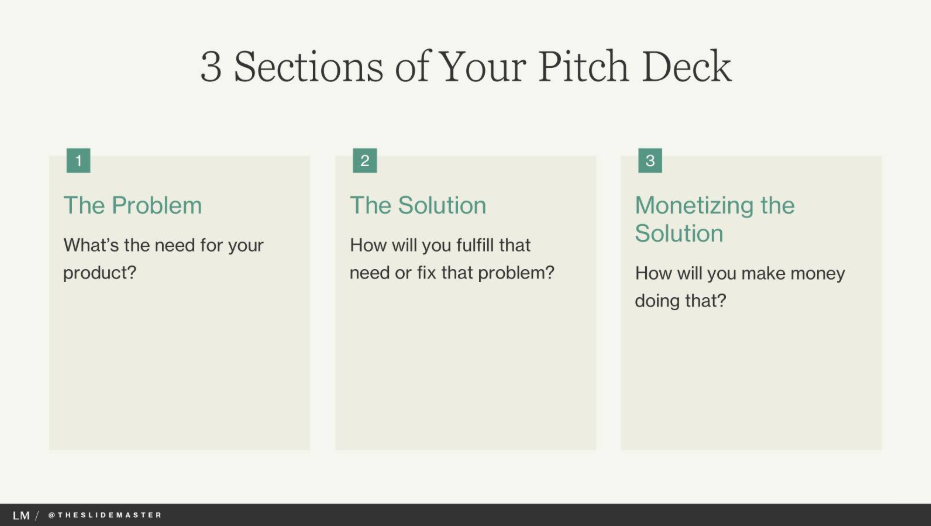
You're not just organizing information. You're creating a narrative that takes your audience on a journey from "I didn't know this was a problem" to "I need to learn more about this solution."
Be sure you can cover these three areas clearly, concisely, and without jargon or confusing language. Every word should earn its place.
Step 3: Design Slides That Support You, Not Compete With You
Here's the universal pitfall: it's tempting to put your entire script on the slides as a safety net. Don't.
Your slides should only include things that are better communicated visually than verbally: product photos or screenshots, data visualizations (not just data tables), simple graphics that illustrate concepts.
Apply the McDonald's Billboard Test. If your slide has way more text than a highway billboard, it's too much. Your audience should glance at your slide, understand the takeaway in three seconds, then look back at you.
Your slide titles should work like newspaper headlines. The most important information should be in the title. Instead of "Results," try "Revenue Increased 40% After Product Launch." Instead of "Process," actually describe what the process is.

A one-word title doesn't tell your audience anything helpful. It forces them to read the entire slide before understanding your story. That's wasted real estate.
Make your slides glanceable. That's the whole job.
Step 4: Practice Like Your Success Depends On It
Don't just practice. Practice strategically.
Rehearse alone first. Bathroom mirror. In your car. Record yourself on your phone. Get comfortable with your own voice.
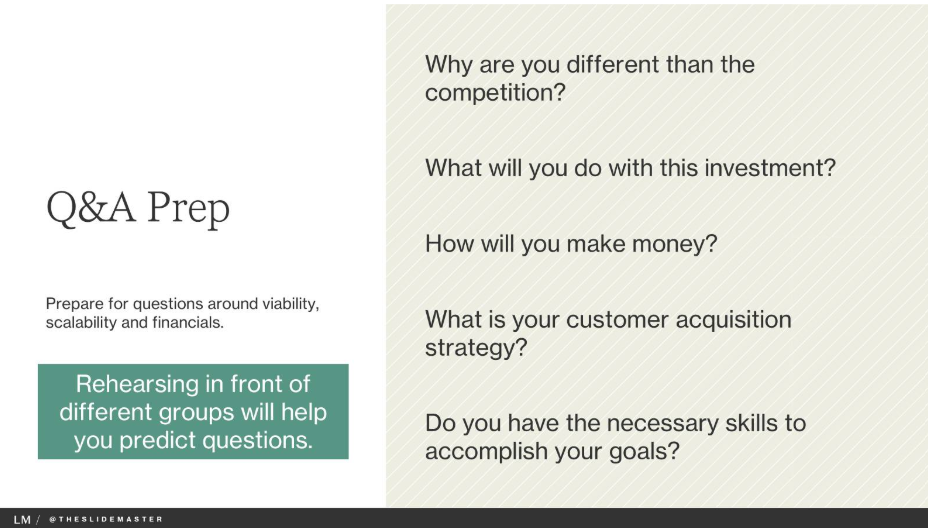
Practice with comfortable people. Family. Friends who are rooting for you. People who want you to succeed but will also give you honest feedback.
Present to uncomfortable people. Networking groups. People outside your industry. People who don't know your space and won't give you the benefit of the doubt.
This progression helps you experience nerves before it counts. It ensures people who don't know your industry can actually understand your pitch.
After every practice session, ask your audience two critical questions:
"Can you repeat back the problem and solution in your own words?"
"What words did you not understand?"
If they can't clearly repeat your story or if they're confused by jargon, you have more work to do.
The Bottom Line
Your pitch isn't about proving you know everything about your business. It's about sparking enough interest that people want to have the next conversation. Think of it like a movie trailer. You don't show the entire movie, just the most compelling parts that make people want to buy a ticket.
A focused pitch that makes people want to hear more will always outperform an exhaustive pitch that tries to say everything. Curate what goes into your pitch. Let the foundation and story do the work. Let your slides complement your words, not duplicate them. And practice until you can deliver it with confidence.
That's the framework. That's how you pitch.

Enjoyed this? Get more like it.
Join The Presentation Lab for frameworks, templates, and coaching to help you present like a leader. New posts land here every month.
